Showing posts with label RTKC. Show all posts

Tuesday, November 18, 2014

Summary of ICS Regional Knowledge Sharing Workshop 18-20 August 2014


Group Picture of the Opening Day Attendees
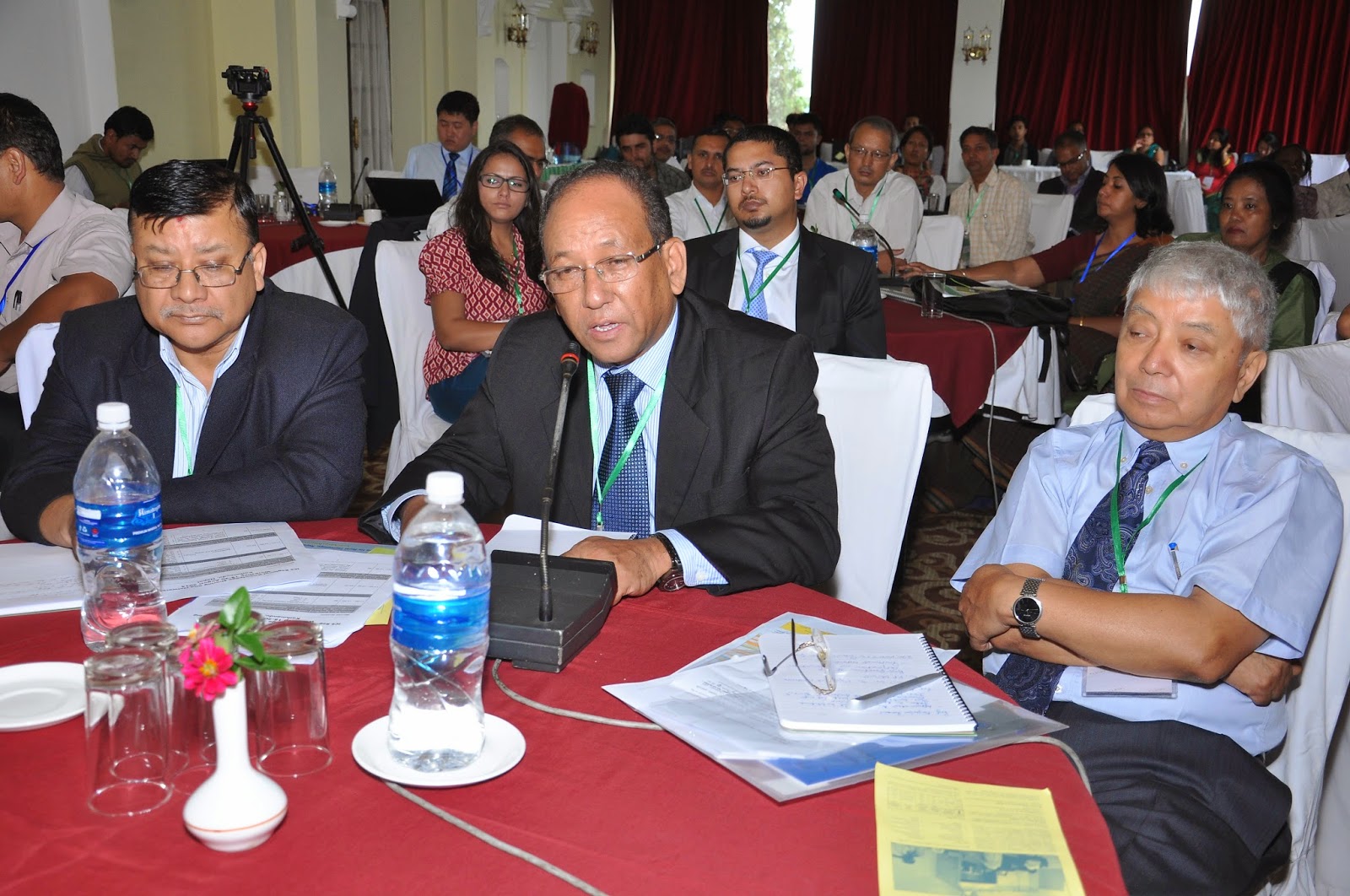
ICS Regional Knowledge Sharing Workshop, 18-20 August 2014 at Hotel Himalaya, Kathmandu Nepal has been one important intervention in bringing together the south Asian Cookstoves testers and related stakeholders to discuss on the issues of biomass cookstoves testing and setting up the ground for the outline of the ISO TC 285 Field Testing Guidance Document (Working Group III). It was participated by about 13 expert delegates from the region and about 45 from Nepal. The first day inauguration and policy session in general was participated by over 80 participants specially the people from related ministries  of Government of Nepal and associated stakeholders including colleagues from RTKCs from China, India, Cambodia and invitees from Bhutan, The World Bank representatives, Clean Energy Development Bank, GIZ among others organization in Nepal. The remaining two days were with the specific testing centers and closely related stakeholders.

Participants at the workshop
The Nepalese policy makers on the first day - inauguration session spoke about the context and its importance especially in Nepal with their commitments for providing friendly environments regarding ICS promotions by generating national and international cooperation’s. The need for updated, firsthand data availability on ICS and related Indoor Air pollution was highly emphasized and was committed by Nepal Planning commission Vice Chair Prof. Dr. Govind Raj Pokhrel (chief guest of the event) to incorporate these issues seriously in the upcoming plans.

The second session, the policy session was related to understanding the ICS and standardization policies/practices of China, India and Nepal. The success and failures of some policies in India, Nepal and China were highlighted with updates on the status of their existing policies/testing standard activities.

Participants at the workshop
It was then followed by the panel discussion on “Development Partner’s Perspectives on ICS Programmes and ICS Testing Issues”. Panel Consisted of the representatives of The World bank, USA, UNDP Bhutan, SNV Nepal,  ENERGIA The Neatherlands and SE4ALL UNDP Nepal. The discussion was based on the pre-framed questions such as:  the organization's definition of program effectiveness; main criteria in choosing stoves for the program; What priority is given to tested stoves and which metrics do they use.. (efficiency, air quality…); perception on user acceptance through stove testing results.. If laboratory performance was significantly different from field performance, would that make a difference to the program's decisions.. etc.. The overall impression was that there is still lack of well-coordinated evaluation modalities for the cookstoves programmes and need to have one that addresses the needs of all the players – donors, ground users, implementers, policy people etc. Different Organizations has their own way of evaluating effectiveness while the test methods and results have not been considered seriously.

Participants at the workshop
The following session was based on Sharing Testing Experiences by 4 RTKCs (Nepal, India, China, Cambodia) – purposes/methods/results/ relationship with ISO IWA/ How do they support National Policies.. were some of the topics of presentations and discussions. Role of key parameters and standard units for evaluation of biomass cookstoves was presented along with Nepal Benchmarks of Clean Cookstoves were also presented on the same session. The testing experiences from the RTKC’s depicted the importance of Quality Assurance as one of the important aspect that has not yet been taken care seriously. Both the lab tests and field test are essential for the cookstoves programmes as well as Research and Development of technology, but there should be a mechanism to link up field test and lab test results. Question of durability testing was unanswered.

Panel Discussion
The late afternoon session dealt with Group Breakouts into five, each with 7-10 people to discussion on Integrating Stakeholders Perspectives on National Policy Framework. Each group contained development partners, RTKC representatives, policy makers. Each came up with certain issues to share as an outcome of their discussions at the end. The overall impression of the group discussion was that every programmes are to compliment national policies while there still exists gaps in between the international programmes and national policies specially in Nepal. National Policies needs more reviews to make it flexible to the private  sectors.

The Day two Sessions were based on the field testing issues- began with sharing on Field Testing Experience – methods used; results obtained; use of results by 4 testing centers and followed by group discussions on : Field Testing Protocols -  Do we have all the protocols we need? How can we gain confidence that field performance reflects design performance? The general outcome was that we do not have a concrete protocol that address all the needs and need one that has it all. Linking the lab results with field has been a long standing issues with the presently available/followed field testing methods. Incorporating user acceptance, durability would add to the field testing guidelines to be worked on in future. Certain projects with CDM requires just efficiencies of stoves in the field where WBTs in the field has been the basis. The issue is the efficiencies in the lab and field using same protocol gives  significant variations and we need to address this issue in the protocols as well. These were some of the issues being raised including others.
Panel Discussion

Another discussion was based on the ‘performance and usage metrics to be examined in the field’. Programme needs and user acceptance were important parameters to be included while the performance matrices should have easily comparable units and identities.  The last discussion topic of the day was on structure of writing Field Testing guidance document for ISO TC 285 Working Group III- with questions to answer such as: what facets are required? Who can participate? Etc. It took quite some time to let people know what is going on in the ISO TC 285 and the next WG meeting in Guatemala. And then the issues of field information as required depending on the programme/project scope were raised.

Day three sessions began with presentations incorporating Strength, Weakness, Challenges, and Opportunities of Stoves Testing. Five testing centers presented opening discussion questions to the floor. Some of the important issue rose regarding the topics were the GACC supported RTKC have been well capacitated for conducting tests while the sustainability issue has been overlooked. Especially in the developing countries people/stoves entrepreneurs are not willing to get their stoves tested unless they are required by the programmes or projects. R & D has not been so much emphasized by the programmes/projects but need to be done that can be one of the means of sustainability to RTKC.   The challenges incorporating calibration issue was important one where the equipments and instruments available in the neighboring countries like India would reduce this problem to some extent.

Group works at the workshop
The following session was associated with the in fractures for ICS Design and Testing Quality Assurance and clearifying the concept of Round Robin Testing initiated by GACC. The infrastructure for Stove Development units was shared by RTKCs having the separate unit for development of stoves. The Round Robbin Testing by GACC was clarified to the participants and views discussed on this initiatives urging all the testing centres to participate. 

The closing sessions was followed by RTKC lab visit by international participants and then closing reception dinner.

Overall the feedbacks from the participants were encouraging and way forward for building on collaboration among the South Asian RTKCs and other development partners. It was commonly agreed that knowledge sharing activities as such should be organized periodically so that everyone could be aware of the developments of each other and position themselves in the pool that could help further development of the sector. Programme Effectiveness needs to be well defined with appropriate modalities and methods.


For the complete report please contact, RTKC Nepal at CRT/N


Friday, July 25, 2014

ICS Regional Knowledge Sharing and Networking Workshop Kathmandu Nepal


Dates: 18-20 August 2014
Venue: Hotel Himalaya Kathmandu, Nepal

Regional Cookstoves Testing and Knowledge Centre (RTKC) Nepal activities have been commencing since November 2012 at Centre for Rural Technology, Nepal (CRT/N) with support from Global Alliance for Clean Cookstoves (GACC). Establishment of RTKC in Nepal has been considered an important intervention to Nepalese cookstoves testing and knowledge service market. RTKC have also been serving as a facilitator to link up Nepalese cookstoves issues with the global networks such as GACC and serving national authorities such as Alternative Energy Promotion Centre (AEPC) and National Bureau of Standards and Metrology (NBSM) to initiate the national standards on cookstoves and develop/improve testing protocols suitable to Nepalese context with reference to IWA.

ICS Regional Knowledge Sharing and Networking Workshop aims to bring together Biomass Testing laboratory representatives from South Asian region and share the ICS testing issues amongst all and discuss on the strength, weakness, opportunity and challenges of the participating testing centers. The workshop will also aid for brainstorming on the field testing guidance document as the New Work Item Proposal (NWIP) for field testing guidance has been passed and will be added to the TC 285 Program of Work by the Committee Secretariats.

The workshop will be organized jointly by RTKC at Centre for Rural Technology, Nepal and Nepal Alliance for Clean Cookstoves (NACC) in coordination with Alternative Energy Promotion Centre (AEPC), under Ministry of Science Technology and Environment (MoSTE), Government of Nepal (GoN) and with support from Global Alliance for Clean Cookstoves (GACC) and University of Illinois, Urbana-Campaign.

Expected participants are stove testing laboratory representatives, stoves testers, researchers, ICS designers, manufacturers and other ICS related stakeholders from the South Asia Regions: China, India, Bangladesh, Bhutan, Nepal, Mongolia, Cambodia, Indonesia and other interested countries.

Contact:
Basudev Upadhyay
Centre for Rural Technology, Nepal (CRT/N)
Bhanimandal, Lalitpur
G.P.O. Box 3628, Kathmandu, Nepal
Tel.: +977-1-5530071, 5544758, 5547627 I Fax: +977-1- 5532962
Email: basudev@crtnepal.org I Web: www.crtnepal.org
www.rtkcnepal.blogspott.com

Monday, March 3, 2014

RTKC Nepal Calls for Research Proposals from Graduate Students from Universities and Colleges in Nepal


Regional Cookstoves Testing and Knowledge Centre (RTKC) at Centre for Rural Technology, Nepal (CRT/N)
Announces
RTKC Graduate Students Research Grant 2014

(CLOSED)

Due to overwhelming requests the deadline for submission of concept paper have been extended to  April 15, 2014.

Centre for Rural Technology, Nepal (CRT/N) is a partner of Global Alliance for Clean Cookstoves (GACC), a public –private initiative led by United Nations Foundation (UNF) to save lives, improves livelihoods, empower women and preserve the environment by creating a thriving global market for clean cooking solutions. Regional Cookstoves Testing and Knowledge Centre (RTKC) an initiative of GACC roofed under CRT/N has been functioning since November 2012 providing testing and knowledge services in line with Government of Nepal’s ambitious mission of ‘Clean Cooking Solution for all by 2017’.

Establishment of RTKC has been considered an important intervention to Nepalese biomass energy sector with the first biomass stoves testing laboratory of its kind in Nepal. Besides, RTKC has been well recognized by stakeholders and have been offering testing orders to RTKC since its inception. RTKC has also been serving as a facilitator to link up Nepalese cookstoves issues with the global networks and serving national authorities to initiate the national standards on cookstoves and develop/improve testing protocols suitable to Nepalese context with reference to International Workshop Agreement (IWA), 2012.

RTKC under its student support programme aims to prepare fresh graduates to develop interest and build up competency in the future job market for which it announces grant that will help produce quality research for their thesis work and contribute to the biomass energy sector.

Thematic Area: Development and adoption of clean cookstoves, Indoor air quality assessment and improvement, biomass combustion efficiency enhancement.
Study Site: Throughout the country, preferably in the remote areas of Nepal.
Eligibility: Masters Final Year Students, preferably environmental science, related engineering (including B.E. 4th year), energy studies or any other related fields. Meritorious women and candidates from socially and geographically marginalised communities will be given preference.

Grant Amount: NPR 25,000 (NPR Twenty Five Thousands ) each and selective use of RTKC Laboratory with other resources

Please Apply Before March 21, 2014 with following documents:
1.    Brief Proposal consisting of Background Information; Statement of the Problem; Objectives; Methodologies; Study area; Budget/Time Plan – Not exceeding 3 pages
2.    Letter of Recommendation from the department/institution with the name and short detail of the supervisor
3.    Copy of Students Identity Card
4.    Brief CV (not more than 2 pages)

The right to accept/reject the proposal will entirely depend on RTKC, CRT/N’s mandate and limitations.

Please email the documents to:
Or,
Drop in to our office at
Centre for Rural Technology, Nepal
Bhanimandal Lalitpur
Tel: +977 1 5000083; G.P.O. 3628                                                                           


Sunday, February 2, 2014

Intensive Training Workshop for Regional Testing and Knowledge Centers, held at Zamorano University, Honduras 10-14 December 2013


Participants posing for group Photo in front of the Zamorano Stove Centre
The Intensive Training Workshop for Regional Testing and Knowledge Centre was organized to strengthen the global consortium collaborating on testing and improving clean cooking technologies, as a follow up to the Intensive Training Workshop held in January 2013 in Research Triangle Park, North Carolina, USA. This event aimed to foster the testing capacities of RTKCs, and to ensure quality and uniformity in their services. Topics/activities covered included establishing a laboratory, quality assurance, data management and integration, field testing, field visits and lab observation, round robin testing, among others.

The workshop was organized by Global Alliance for Clean Cookstoves (GACC), a public-private partnership under the umbrella of United Nations Foundation. The Alliance, in an effort to serve its goal of enabling 100 million households round the world to adopt clean and efficient cooking technologies by 2020 has supported establishment of Regional Testing and Knowledge Centres (RTKCs) in many different countries. As such, the alliance has also been working on capacity development of and collaboration between the RTKCs. Zamorano University hosted the programme and facilitated associated activities. It has a dedicated Stove Unit and also hosts RTKC for Honduras.
Ranyee (GACC) and Tim (ZU) opening the floor with
Introduction of  participants at the Opening dinner at Zamorano Cafeteria

The program brought together participants from various RTKCs and relevant academic, governmental and non-governmental organizations like the US EPA, University of Illinois, Approvecho Research Centre, Berkeley Air Monitoring Group etc. from Asia, Africa, and North, Central and South America.

Various presentations, demonstrations and site visits were employed in the workshop to disseminate pertinent information and for demonstration of facilities and infrastructures, practices, services and practical application of knowledge. Discussions were integrated within these means to foster interactive environment, and separate discussion sessions were held for certain topics.

The presentation (and discussion) topics and rotations/site visits that were performed during the workshop are outlined in the next section.

The workshop enhanced the participants' (particularly from RTKCs) awareness regarding stove testing and provided techniques for other aspects like quality assurance, data management, uncertainty calculations etc. Moreover, it also provided means for RTKCs from all over the world to come together and share their experiences. The programme paved a way for collaboration among all RTKCs for sharing of plans, results and to ensure uniformity in practices.

A tentative plan was formed for the Round Robin Test, through rigorous discussions among the Interim Committee at first and among all participants later. The prototype of base stove model to be tested, fuel and operation methods were determined. Participants also agreed upon means to share related information amongst all associated to make the testing a huge success.

Prof. Rajendra Prasad (Teri, India) discussing with (Gracia, ZU)
on the fire starter at the Zamorano Stove Lab 
Demonstration of new innovations and more readily available technologies gave participants knowledge on recent development in the field of stove testing. Observation of Zamorano Stove Centre's facilities, infrastructures and equipment provided information about their lab, services etc. Site visits provided insight into the scenario of cooking sector in rural households in Honduras.


More Insights on the Workshop:

Sunday, September 22, 2013

RTKC Nepal Materialized - The Initiation

RTKC entrance
RTKC - an initiative to improve technology, communicate performance and promote sales and adoption of clean cooking devices promoting research and development of cookstoves in Nepal and the region is funded by Global Alliance for Clean Cookstoves (GACC) and hosted by Centre for Rural Technology, Nepal (CRT/N). The RTKC is developing into an independent and internationally recognized stove testing service provider moving ahead with the mission of establishing itself into a cen
tre of excellence in biomass knowledge and stoves testing sector using globally accepted testing procedures for Nepal and the South Asian region.
The project started in November 2013 and a number of activities have been accomplished with in the period. The initial activities such as identifying/locating the laboratory equipments, staffs recruitments and reconstruction of RTKC laboratory took place during the early inception period of the project.

Knowledge Centre
With necessary supports from Associate Professor Dr. Tami Bond, University of Illinois an International Consultant for RTKC Nepal and Aprovecho Research Centre (ARC), Oregon the equipments were identified and processed for procurement during the first few months of inception. Laboratory Emission Measurement System (LEMS) a product of ARC was ordered.

Mr. Hari Gopal Gorkhali, RTKC Supervisor attended the EPA Intensive Training for Cookstoves Testing at Triangle Park North Carolina during 28 January to 1  February 2013 on GACC’s invitation along with 40 stove testers, researchers, developers and implementers from sixteen different countries. The training was focused on extensive formal and informal discussions on laboratory set‐up, maintenance, calibration and management; laboratory safety; quality assurance project plans; fuel measurements; field equipment set‐up; strengthening collaboration and knowledge sharing between testing centers; data processing and analyses. This had really been fruitful to start up the project at CRT/N.

RTKC Nepal aims to be a centre of excellence in the field of cookstoves testing and a knowledge centre promoting research and development of cookstoves in Nepal and the region. The future plans include the wider networking and up scaling collaboration with global partners to establish itself as a sustaining entity. The baseline activities to obtain this have been to have well trained staffs and well equipped laboratory to provide service to clients and develop/share knowledge products and projects to support research and development.

Monday, September 2, 2013

Regional Cookstoves Testing and Knowledge Centre (RTKC) Nepal Down the Lane

RTKC Milestones in Nepal

RTKC - an initiative to improve technology, communicate performance and promote sales and adoption of clean cooking devices promoting research and development of cookstoves in Nepal and the region is funded by Global Alliance for Clean Cookstoves (GACC) and hosted by Centre for Rural Technology, Nepal (CRT/N). The RTKC is developing into an independent and internationally recognized stove testing service provider moving ahead with the mission of establishing itself into a centre of excellence in biomass knowledge and stoves testing sector using globally accepted testing procedures for Nepal and the South Asian region.
The project started in November 2012 and a number of activities have been accomplished with in the period. The initial activities such as identifying/locating the laboratory equipment, staffs recruitment and reconstruction of RTKC laboratory took place during the early inception period of the project.

With necessary supports from Associate Professor Dr. Tami Bond, University of Illinois an International Consultant for RTKC Nepal and Aprovecho Research Centre (ARC), Oregon the equipments were identified and processed for procurement during the first few months of inception. Laboratory Emission Measurement System (LEMS) a product of ARC was ordered.

Mr. Hari Gopal Gorkhali, RTKC Supervisor attended the EPA Intensive Training for Cookstoves Testing at Triangle Park North Carolina during 28 January to 1  February 2013 on GACC’s invitation along with 40 stove testers, researchers, developers and implementers from sixteen different countries. The training was focused on extensive formal and informal discussions on laboratory set‐up, maintenance, calibration and management; laboratory safety; quality assurance project plans; fuel measurements; field equipment set‐up; strengthening collaboration and knowledge sharing between testing centers; data processing and analyses. This had really been fruitful to start up the project at CRT/N.

Prof. Kirk R. Smith’s CRT/N Visit – Professor Smith from University of California Berkeley visited CRT/N on 15 January 2013 on his visit to Nepal. Professor Smith was invited to CRT/N as a resource person to update its staffs on the Global perspectives on Indoor Air Pollution (IAP) and Cookstoves related developments. In the mean time RTKC benefited with hands on knowledge of wide range of IAP instruments developed by Berkeley Air Monitoring Group and helped us identify the instruments needed for RTKC.

RTKC Advisory Group Formation – A loose form of advisory group have been formed in the month of February 2013. It comprised of Biomass energy experts from different sectors. Honorary Members of the advisory group are -
1.       Dr. Krishna Raj Shrestha, former Chair, Research Centre for Applied Science and Technology (RECAST), Tribhuvan University
2.       Dr. Bim Prasad Shrestha, HOD Dept. of Mechanical Engineering, Kathmandu University
3.       Dr. Ramesh Man Singh, Vice Chair, Centre for Energy and Environment Nepal

Equipment Setup and WBT Training – a ten days training on LEMS setup and Introductory WBT Training was conducted at its renovated laboratory at CRT/N under the guidance of Mr. Alex Seidel, Emission Engineer at ARC lab during 8-18 April 2013. LEMS was setup and CRT/N RTKC along with Renewable Energy Testing Station (RETS) participants under Nepal Academy of Science and Technology (NAST) also benefited form the training. RTKC lab came into operation from May 2013 with makeup tests for sharpening the testing ability of RTKC staffs.

RTKC Inauguration – The formal inauguration of

RTKC took place on 6 June 2013 in the special presence of Prof. Dr. Govinda Raj Pokharel, Executive Director Alternative Energy Promotion Centre (AEPC), Government of Nepal (GoN) and Renowned Cardiologist Dr. Mrigendra Raj Pandey. Representatives from different government bodies, INGOS, NGOs, biomass entrepreneurs and related stakeholders were present in the occasion. Since then some fixed type rocket stoves have been tested and reported to clients.


RTKC’s participation at Clean Cooking Market Place (CCMP 2013) – RTKC participated the event organized by AEPC along with various stakeholders during 10-12 July 2013 at United Trade Centre, Thapathali. The event included Seminar, Expo and Field Visit. Centre for Rural Technology Nepal (CRT/N) being one of the supporters of the event had participated actively in the mission.  Products, Services and Partnership opportunities were showcased by CRT/N with highlights on Regional Cookstoves Testing and Knowledge Centre (RTKC) establishment that provide cookstoves testing services with precise efficiency and accuracy.  The test results of some of the stoves were pretty interesting to visitors. The other highlight of CRT/N was the Improved Cookstoves Programme with Carbon Finance (ICF) in which the two rocket stoves viz: Rocket stove with Metallic Combustion Chamber and Metallic Top Plate (RS1.1) and Rocket Stove with Ceramic Combustion Chamber and Metallic top plate (RS3.1) being promoted in the far-western development region were showcased. One another attraction was the Business Model ICS (Institutional Rocket Stove with Chimney, IRSC) recently developed by Rural Energy and Technology Service Centre (RETSC) team at CRT/N.

Prof. Dr. Rajendra Prasad’s visit to CRT/N – Prof. Prasad from IIT Delhi visited CRT/N RTKC on 11 July 2013. RTKC Nepal’s activities and vision/mission were shared. Prof. Prasad did share on the National Standards of Cookstoves Testing in India and envisioned us on the latest developments on the stoves testing tools in the global arena. His presence also as a RTKC coordinator at IIT, India helped RTKC Nepal built up the smooth relation among the RTKCs supported by GACC. His willingness to support and move ahead in a collaborative manner had been an encouraging factor for RTKC Nepal.

Training and Capacity Building Workshop on Cookstoves Programme Effectiveness – took place during 22-24 July 2013 at Yala Maya Kendra, Patan under the guidance of Prof. Dr. Tami Bond. The event was also supported by Winrock international Nepal. It was participated by 17 Core trainees (13 CRT/N- 3 from field offices, 3 AEPC, 1 RETS). The training workshop was organized to develop the capacity of staffs working in biomass sector at CRT/N and few other related organizations to use testing protocols and develop other tools to evaluate the effectiveness of cook stove programme.
Training Module was based on the following points
                -              Creating RTKC as a Centre of Excellence
                -              Preference of Testing Methods                CCT/KPT/WBT 
                -              Issues related to field/lab tests

National Workshop on Standards and Testing of Cookstoves – took place at Hotel Himalaya on 25 July 2013. The event was organized in collaboration with AEPC, GoN in association with Kathmandu University, Centre for Energy and Environment Nepal (CEE-N), Practical Action/ Indoor Air Pollution and Health Forum, Renewable Energy Test Station (RETS) under Nepal Academy of Science and Technology (NAST), Centre of Energy Studies (CES), Institute of Engineering (IOE), Tribhuvan University.
The event was actively participated by over 80 participants representing different players such as National Bureau of Standards and Testing (NBSM) GoN, Smart Urja Pvt. Ltd., World Bank, UNDP/RERL, WWF, ICIMOD, RECAST, NAST, CRT/N, ENPHO, ECCA, FOST Nepal, Min Energy, NEEP/GIZ, Nepal Services Pvt. Ltd,  Swastha Chulo, Winrock International, Subha Biomass Pvt. Ltd, Global Peace Association, IUCN among others.

The consensus of the workshop was that providing clean energy (cooking solutions) to people who needed is the main goal and standard benchmark and protocol are the tools for achieving this. The priority of the time is setting up the benchmark keeping in mind the GoN’s ambitious mission of “Clean cooking Solutions for all by 2017” and revise the interim protocol 2009 for testing standards and create uniformity in testing procedures for all the testing centres in Nepal by obtaining accreditation from NBSM to ensure quality.

Dr. Ranyee Chiang’s visit to CRT/N – Dr. Chiang from Global Alliance for Clean Cookstoves (GACC) on her mission to south Asian region visited CRT/N on 14 and 15 July 2013. During her visit several fruitful discussions took place. RTKC activities and GACCs views were clarified during the meetings.  

Idea Shearing on Improving Testing Protocols – This event was organized jointly by RTKC CRT/N and AEPC at AEPC Conference hall in the afternoon of 14 August 2013 in the special presence of Dr Ranyee Chiang. The outcome of National Workshop on Standards and testing of Cookstoves were shared and discussion took place on improving testing protocols among the number stakeholders of GoN, individual testing centres including NGOs, INGO etc. in the context of GoN’s mission of “Clean Cooking Solutions for all by 2017”  and biomass experts. Over 35 participants participated in the programme.

RTKC Nepal aims to be a centre of excellence in the field of cookstoves testing and a knowledge centre promoting research and development of cookstoves in Nepal and the region. The future plans include the wider networking and up scaling collaboration with global partners to establish itself as a sustaining entity. The baseline activities to obtain this have been to have well trained staffs and well equipped laboratory to provide service to clients and develop/share knowledge products and projects to support research and development.


Sunday, September 1, 2013

GACC Representative visits CRT/N


Dr. Ranyee Chiang, Technical Manager at Global Alliance for Clean Cookstoves visited CRT/N on 14 August 2013. Mr. Lumin Kumar Shrestha Officiating ED welcomed her with brief introduction to CRT/N with its brief history and role it has played in the country’s renewable energy sector. Then, Mr. Basudev Upadhyay, RTKC Coordinator at CRT/N continued the CRT/N’s strategic functions in the renewable energy sector along with information on the organizational assets and initiatives. This was followed by RTKC milestone presentation. RTKCs up to date activities were shared coupling with associated discussions and clarifications in between. The chronological updates of RTKC activities were appreciated. Collaboration aspect of CRT/N as a whole and RTKC specifically was briefed by officiating supervisor, Mr. Subarna Kapali. The role of partners at various levels of stove implementation process and collaboration among various testing centers were the efforts shared here.

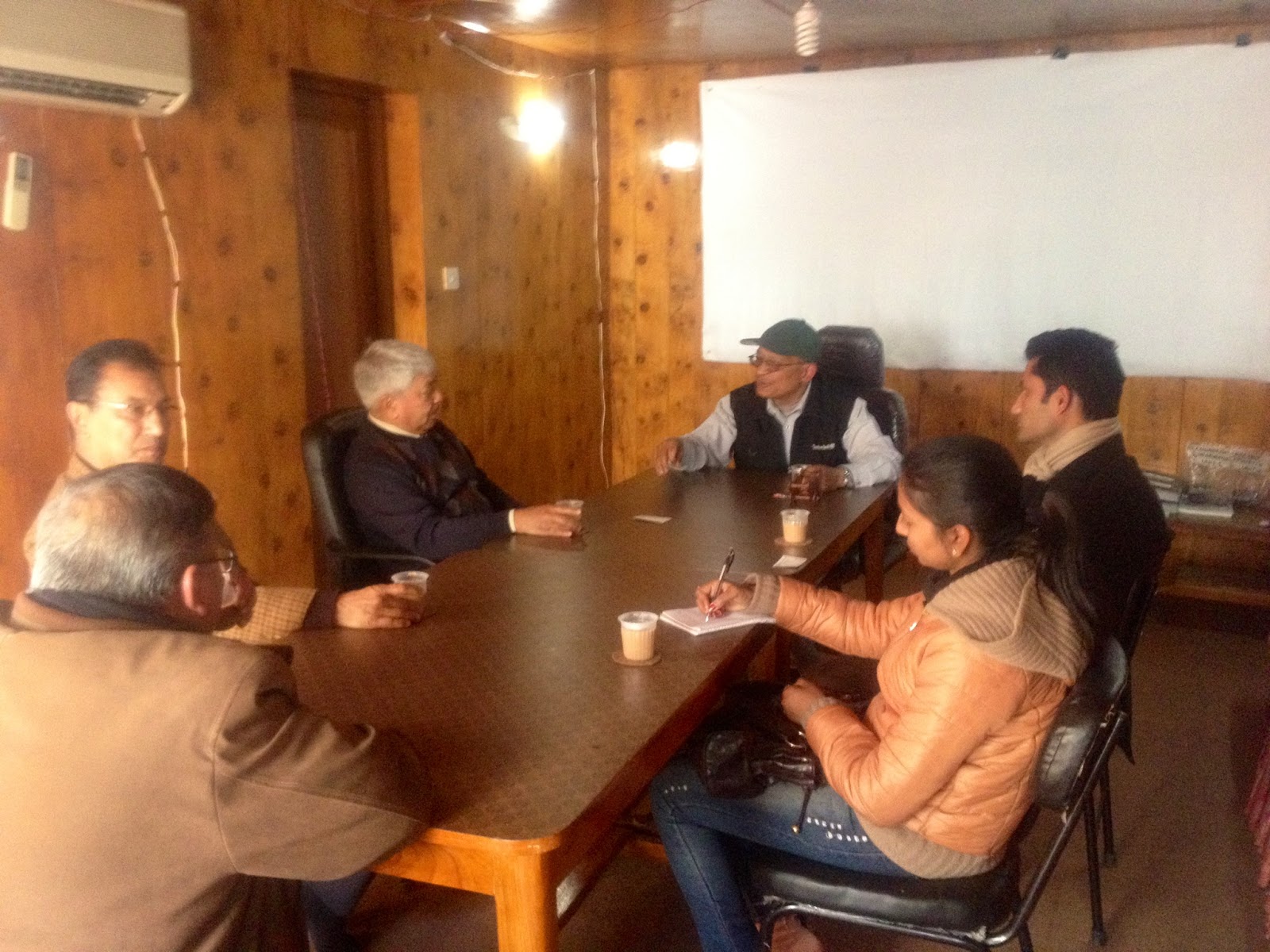
During the conversation several quarries were raised by Ranyee. Among them the future activities of the grant period were discussed for their purpose and scope. For the first years remaining activities, ICS Regional Network Building Workshop was the major topic of discussion. The purpose should not just be limited to sharing on what RTKC’s around the region have been doing. Some kind of research papers presentation along with training on some specific topics (to be identified..) would be more meaningful and interesting. Not necessary to follow the time line activities as they were proposed in the proposal. The activities can be reframed depending on the present necessity to achieve the overall goal of RTKC. In this regard RTKC team has agreed to discuss within the team and propose through email. Our multi-partner workshop recently concluded was highly appreciated. In the meantime RTKC’s 5 year road map was also briefly shared.In this regard, Ranyee has agreed to connect some Knowledge Management related people at GACC. One important issue Ranyee raised was on sharing the test results from the laboratory that purposively depends on the clients’ interest. Prior to sharing we need to have consent from the clients.  Besides Testing,  Ranyee also figured out that RTKC can become the leading knowledge partner for the Government of Nepal’s Energy sector. So activities relating to research and development should be prioritized that can influence the national policies in long run.
Dr. Chiang also seemed contended with the RTKC team as she mentioned the testers in the lab are women which was the exception among other RTKC’s. Sharing experience of her visit to other RTKC’s around the globe, Bolivia and Honduras have similar issues of Nepal and it would be fruitful to link up with them regarding protocol developments and testing on the high altitude stoves (Bolivia) and fixed types of stoves (Honduras). IIT Delhi is well equipped in context to laboratory set up and would be good to visit it. Dr. Chiang was also concerned about the RTKC advisory group. 


Dr. Chiang also visited RTKC lab. The team then moved to AEPC for the afternoonevent “Idea Sharing on Improving Protocols” at about 13:30 PM. 

Talk Programme - Idea Sharing on Improving of Stoves Testing Protocols

The programme was jointly organized by CRT/N and AEPC. It was attended by over 35 participants mostly Policy session attendees of the National Workshop on Standards and Testing of Cookstoves in Nepal held on 25 July 2013 at Hotel Himalaya.

The programme started with welcome remarks from AEPC ED, Prof. Dr. Govinda Raj Pokhrel where he highlighted the role of AEPC and CRT/N on materializing the ambitious mission of clean cooking solution for all by 2017. This was continued by the presentation on Recent Development in Nepal on Cookstoves Sector and Importance of Testing and quality assurance in NRREP context by Asst. Director AEPC Mr. Nwaraj Dhakal.

The following was the presentation on the National Workshop on Standards and Testing of Cookstoves in Nepal that took place on 25 November 2013 by RTKC coordinator, Mr. Basudev Upadhyay. With the brief introduction of the workshop main issues and responses were presented with the conclusion on the outcome of the workshop.
This was followed by Dr. Chiang’s updates on recent global developments on standards and Testing of cookstoves.

This was followed by discussions. The unanswered issues of the workshop were put forth for discussion. Some of the issues that came up were:

Weather Nepal should try to propose its own protocols and standards or not
For instance follow the international guidelines and opt for their own protocols and standards once enough knowledge and expertise is gained in near future. We still have long way to go to provide our feedback to international community like ISO.

NBSM strongly advocated for the National standards and that is possible to attain through National stakeholders support. The testing centers should put forth the requirements and suggest NBSM to work on it as NBSM doesnot have enough knowledge and expertise on the cookstoves sector. But jointly it can be developed.

The programme concluded with concluding remarks and summary of the programme by Mr. Nawaraj Dhakal.

CRT/N’s Participation at CCMP 2013

CCMP 2013 July

August 12, 2013


As a part of promoting clean cookstoves, Alternative Energy promotion Centre (AEPC) organized an international event "Clean Cookstoves Market Place 2013 (CCMP 2013)" from July 10th - 12th 2013 in Kathmandu with the purpose of exploring and showcasing successful national and international cookstoves designs and business models along with creating a conducive environment for collaboration between cookstoves entrepreneurs and financing institutions. Nepal Alliance for Clean Cookstoves website was officially lunched as a national level alliance that works as an affiliate of Global Alliance for Clean Cookstoves.
The event included Seminar, Expo and Field Visit. Centre for Rural Technology Nepal (CRT/N) being one of the supporters of the event had participated actively in the mission.  Products, Services and Partnership opportunities were showcased by CRT/N with highlights on Regional Cookstoves Testing and Knowledge Centre (RTKC) establishment that provide cookstoves testing services with precise efficiency and accuracy.  The test results of some of the stoves were pretty interesting to visitors. The other highlight of CRT/N was the Improved Cookstoves Programme with Carbon Finance (ICF) in which the two rocket stoves viz: Rocket stove with Metallic Combustion Chamber and Metallic Top Plate (RS1.1) and Rocket Stove with Ceramic Combustion Chamber and Metallic top plate (RS3.1) being promoted in the far-western development region were showcased. One another attraction was the Business Model ICS (Institutional Rocket Stove with Chimney, IRSC) recently developed by Rural Energy and Technology Service Centre (RETSC) team at CRT/N.


Besides these several public/private organizations entrepreneurs from different part of the world (chiefly from India, China, and Nepal) working in clean cooking solutions participated in the event.  

Featured Post

Regional Cookstoves Testing and Knowledge Centre (RTKC) Nepal Down the Lane

RTKC Milestones in Nepal RTKC - an initiative to improve technology, communicate performance and promote sales and adoption of clean coo...